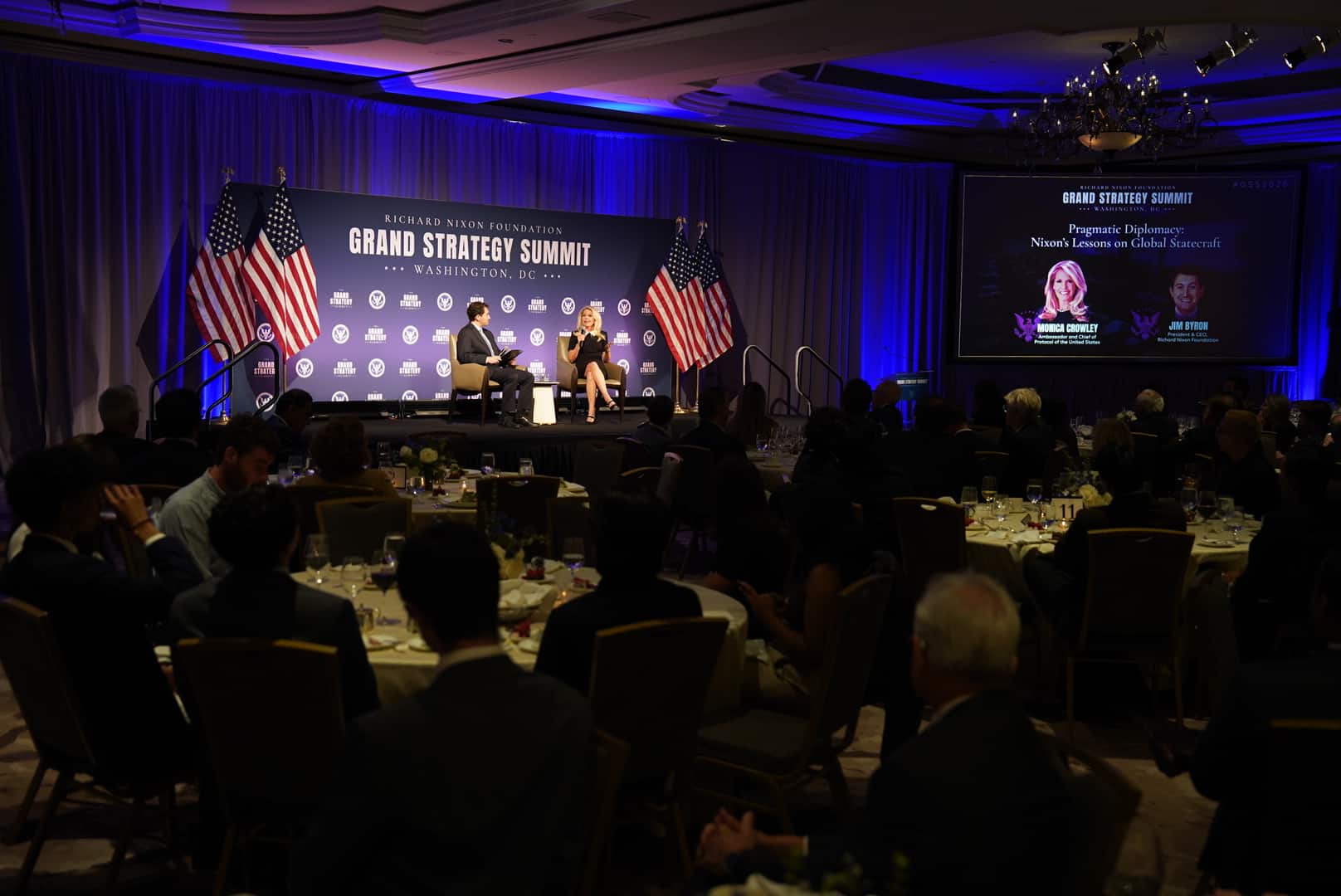
On Sept. 30 and Oct. 1, 2026, the Richard Nixon Foundation hosted its annual Grand Strategy Summit at The Ritz-Carlton in Washington. As the nation marks its 250th anniversary, the flagship foreign policy conference brought together senators, members of Congress, administration officials, diplomats and scholars to examine the domestic and foreign policy decisions shaping America today and the America of tomorrow. Conversations spanned counterterrorism, competition with China, America’s alliances, energy, the Middle East and artificial intelligence. Throughout, speakers applied President Nixon’s approach to grand strategy: setting priorities, maintaining the balance of power and explaining policy to the American people.
Guests from the diplomatic corps represented more than 30 countries, with nearly 20 ambassadors in attendance. C-SPAN carried portions of the Summit live.
Opening Discussion: Pragmatic Diplomacy: Nixon’s Lessons on Global Statecraft
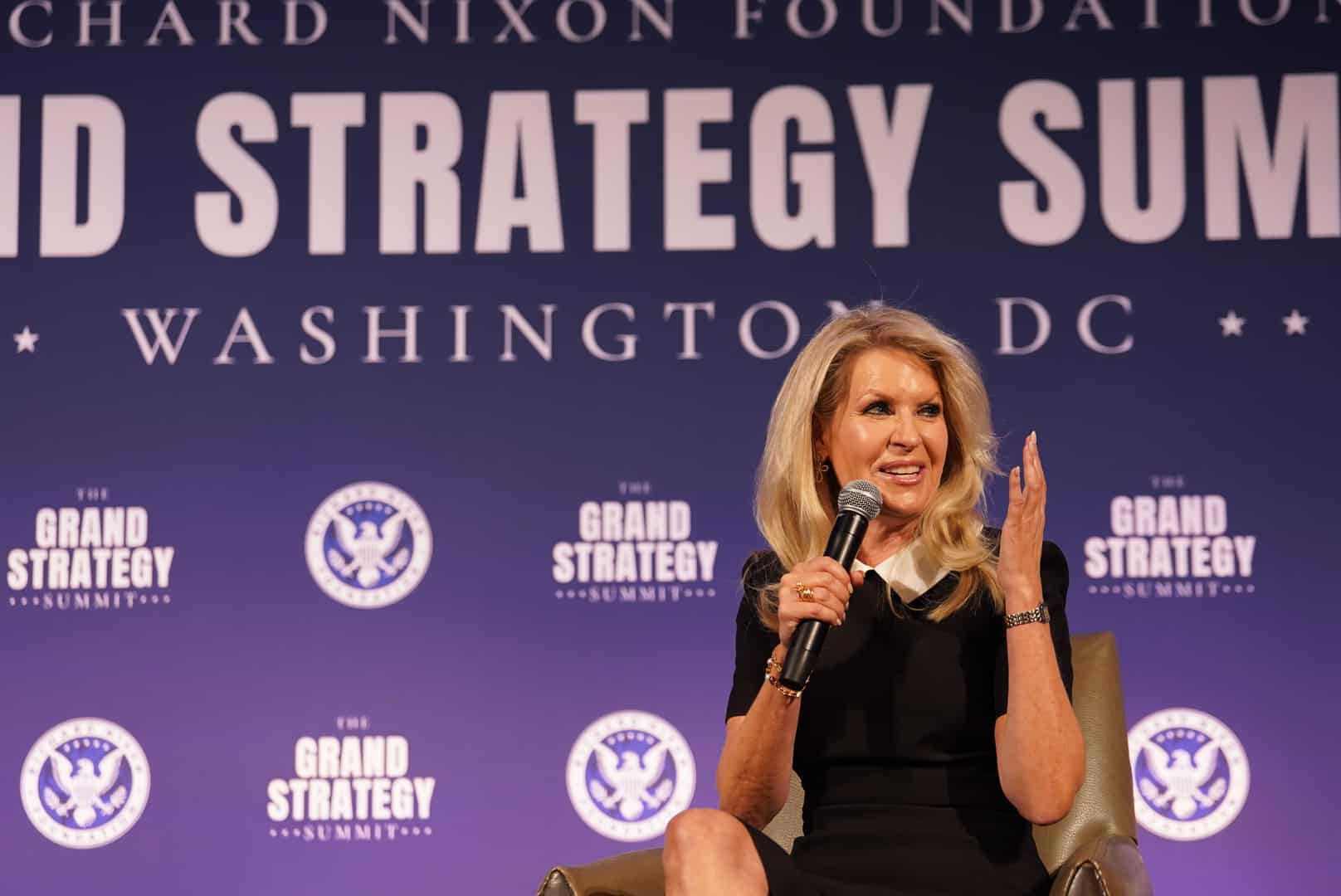
Ambassador Monica Crowley in Conversation With Jim Byron
The summit opened with a conversation between Nixon Foundation President and CEO Jim Byron and Ambassador Monica Crowley, Chief of Protocol of the United States and Assistant Secretary of State. Crowley, who served as Richard Nixon’s Foreign Policy Assistant during the final four years of his life, recounted writing to him as a Colgate University junior after reading 1999: Victory Without War. That letter led to an hour-and-a-half meeting and, later, a job working on his final two books and traveling with him to China, Russia and across Europe.
Fresh from the state visit of Chinese President Xi Jinping, which her office helped plan, Crowley said Nixon and President Trump share a pragmatic approach to China, with both “buying time” — Nixon to let America recover from Vietnam, Trump to reduce U.S. dependence on China. She called Nixon “a true visionary” who “could see what the world was going to look like five, 10, 20, 30 years down the road.” She closed with a look ahead to the 2028 Olympic Games in Los Angeles, where she will serve as the administration’s representative.
Watch here:
Oct. 1 Welcome Remarks: Jim Byron and Secretary Robert Wilkie
Nixon Foundation President and CEO Jim Byron opened the day by framing the program around America’s 250th birthday and the practice of grand strategy. He posed the question at the center of the summit: “What should our leaders be doing now to further American interests five years, 10 years, 20 years down the road?”
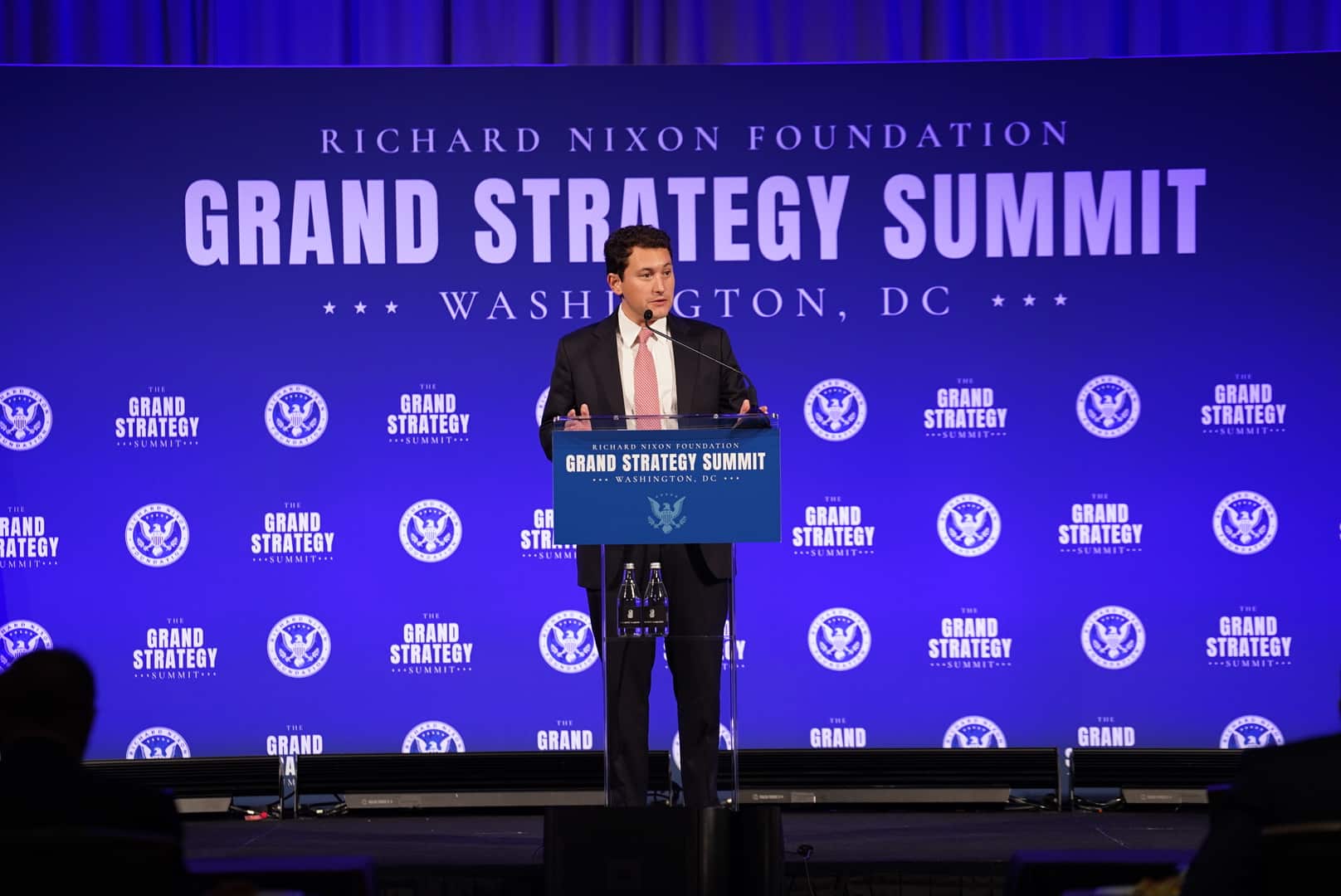
Former Veterans Affairs Secretary Robert Wilkie of the America First Policy Institute, a member of the Summit Steering Committee, set the scene with a portrait of Nixon as statesman and strategist. He recalled that his father, a young major, was among the Americans fighting in Vietnam when Nixon took office and came home because Nixon believed “we must create a generation of peace.” Wilkie called Nixon “the most formidable practitioner of the arts of diplomacy in the last 60 years,” pointing to the opening to China, détente and Nixon’s insistence that Europe take responsibility for its own security. He closed by urging today’s silent majority “to be a little less silent.”
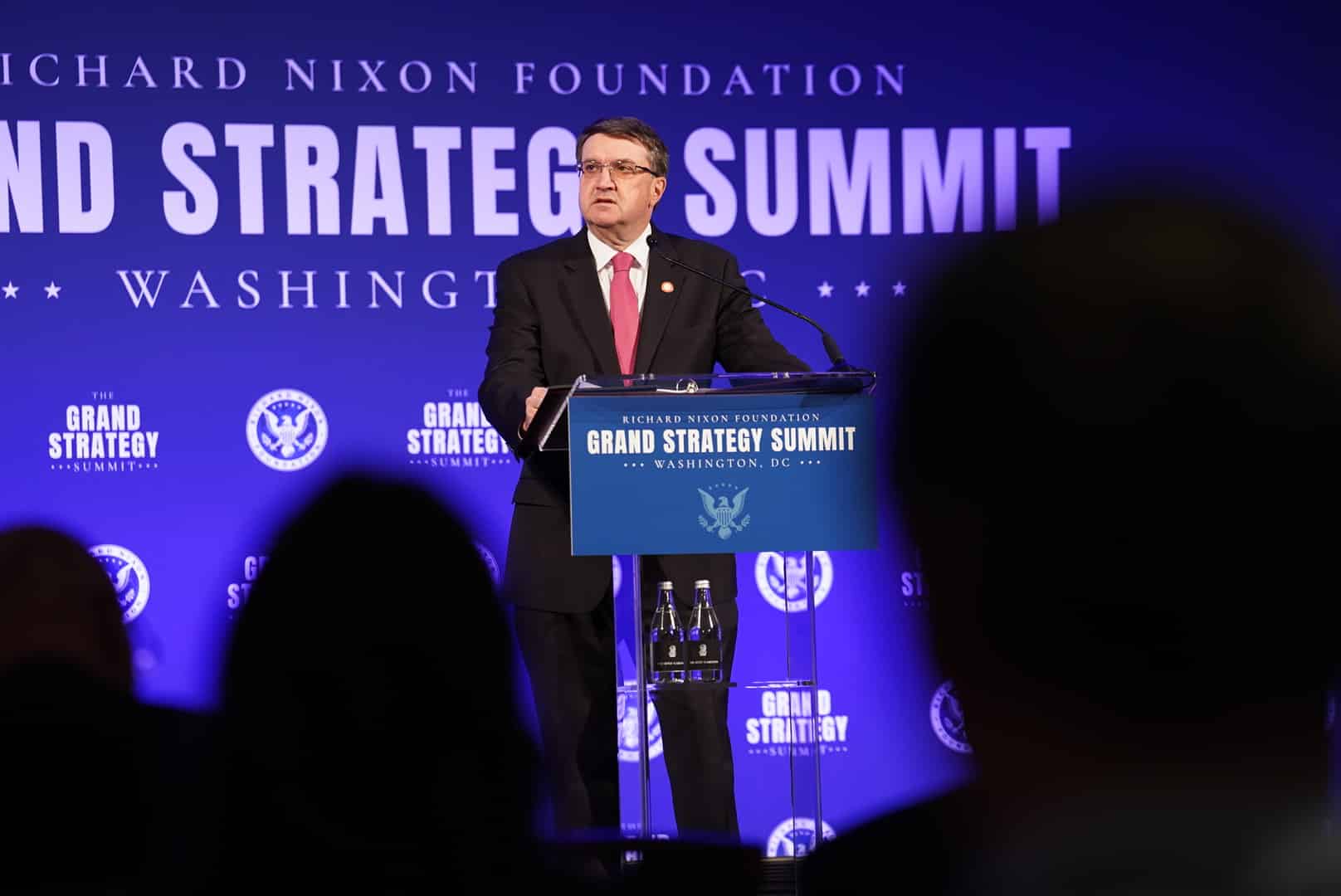
Watch here:
Counterterrorism and National Security Briefing
Dr. Sebastian Gorka, Deputy Assistant to the President and Senior Director for Counterterrorism
Dr. Sebastian Gorka summarized the administration’s National Security Strategy and the counterterrorism strategy nested beneath it. Echoing Nixon’s emphasis on priorities, he cited his former professor Graham Allison: “If you have more than 100 vital interests, you have no vital interests.” Gorka said “strategy begins with the art of prioritization” and outlined three categories of threats: drug cartels, global jihadist groups and domestic left-wing violence. He described the administration’s approach to partners abroad as an open offer: “We are America first. But that does not mean America alone.”
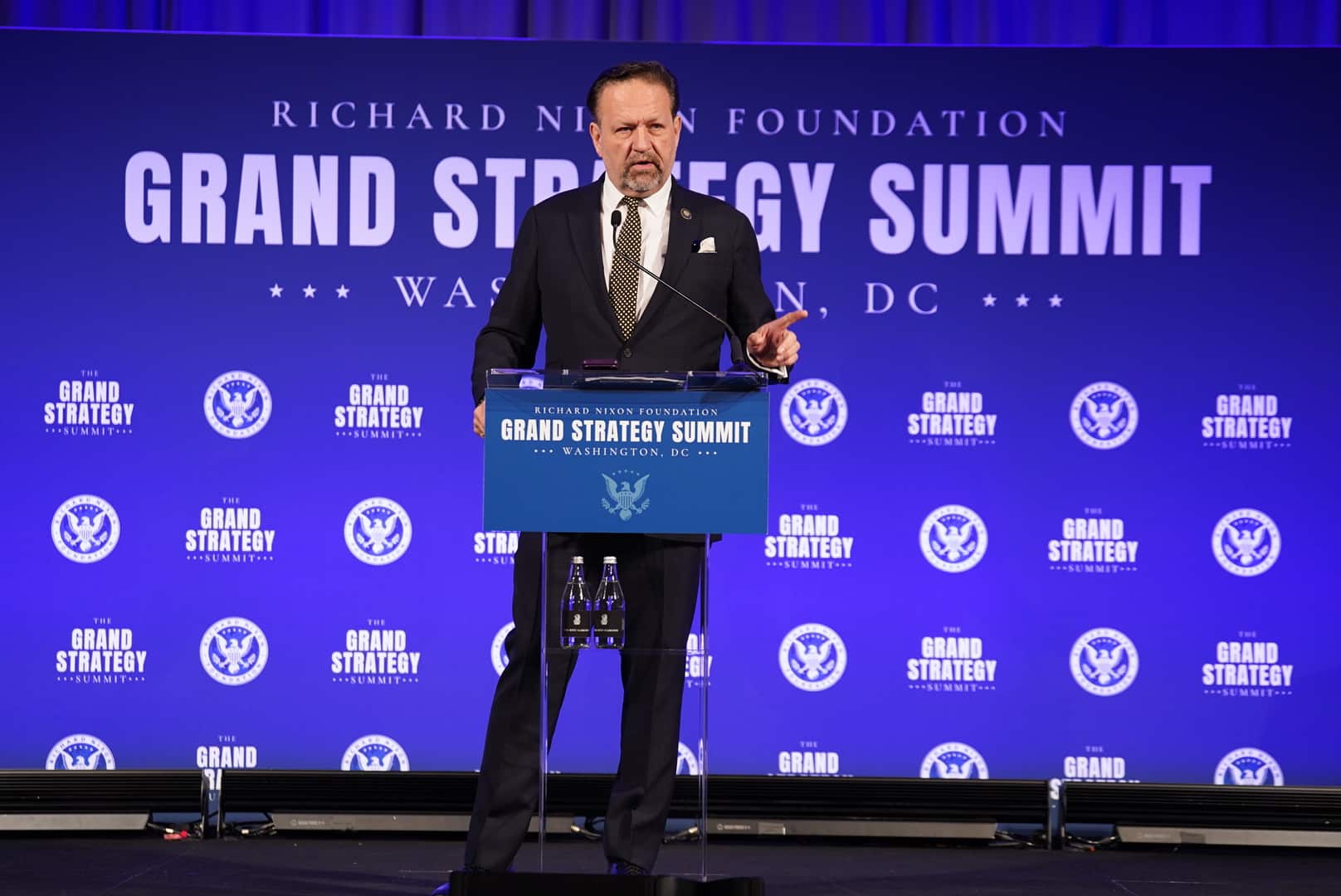
Watch here:
Competing With China: Conservative Realism in Practice
Sen. Steve Daines in Conversation With Matthew Continetti
Opening with a clip of President Nixon explaining that China’s “primary interest is China. Always China,” the session examined the economic and technological competition between the United States and China. Sen. Steve Daines, R-Mont., who spent six years working in China for Procter & Gamble before holding office, spoke with Matthew Continetti of the American Enterprise Institute about China’s fast-moving innovation ecosystem in AI, biotech and engineering talent. “The only thing more dangerous than a senator who’s never been to China is one who was there five years ago,” Daines said. He backed continued engagement with Beijing while reducing risk, urged consistency on Taiwan and highlighted the U.S.-brokered peace between Azerbaijan and Armenia as an opening in Central Asia. The conversation also covered the upcoming midterm elections, and Daines closed on a confident note: “I truly believe freedom wins.”
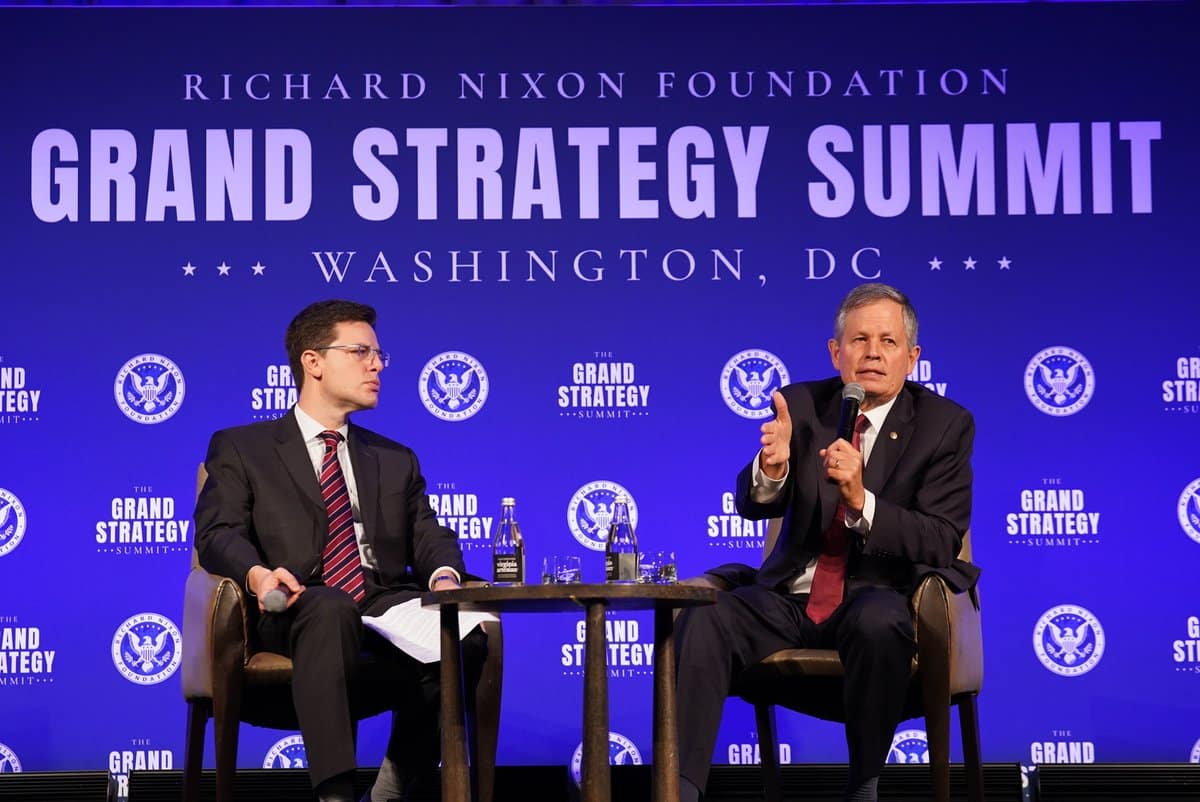
Watch here:
Future of Alliances: American Leadership in a Changing World
Alex Wong, Walter Russell Mead, Rebeccah Heinrichs & Eli Lake (moderator)
A 1970 clip of President Nixon — “It is not my belief that the way to peace is by giving up our friends or letting down our allies” — opened a panel on America’s alliance system with Alex Wong, Walter Russell Mead and Rebeccah Heinrichs, moderated by Eli Lake. Wong said the system is “going through change” but its missions remain clear: deterring Russia through NATO and balancing China in the Indo-Pacific. Mead argued that the information revolution will reshape the international order much as the Industrial Revolution did, and that the United States faces “Nixon’s problem again” — alliances not robust enough for the moment, a challenge Nixon met by rebalancing burdens with allies in the 1970s. Heinrichs noted that the United States now faces two nuclear peer adversaries for the first time and said Washington is pressing allies to do more on conventional defense while maintaining its nuclear guarantee. The panel also debated Greenland’s effect on NATO and the future of the Abraham Accords.
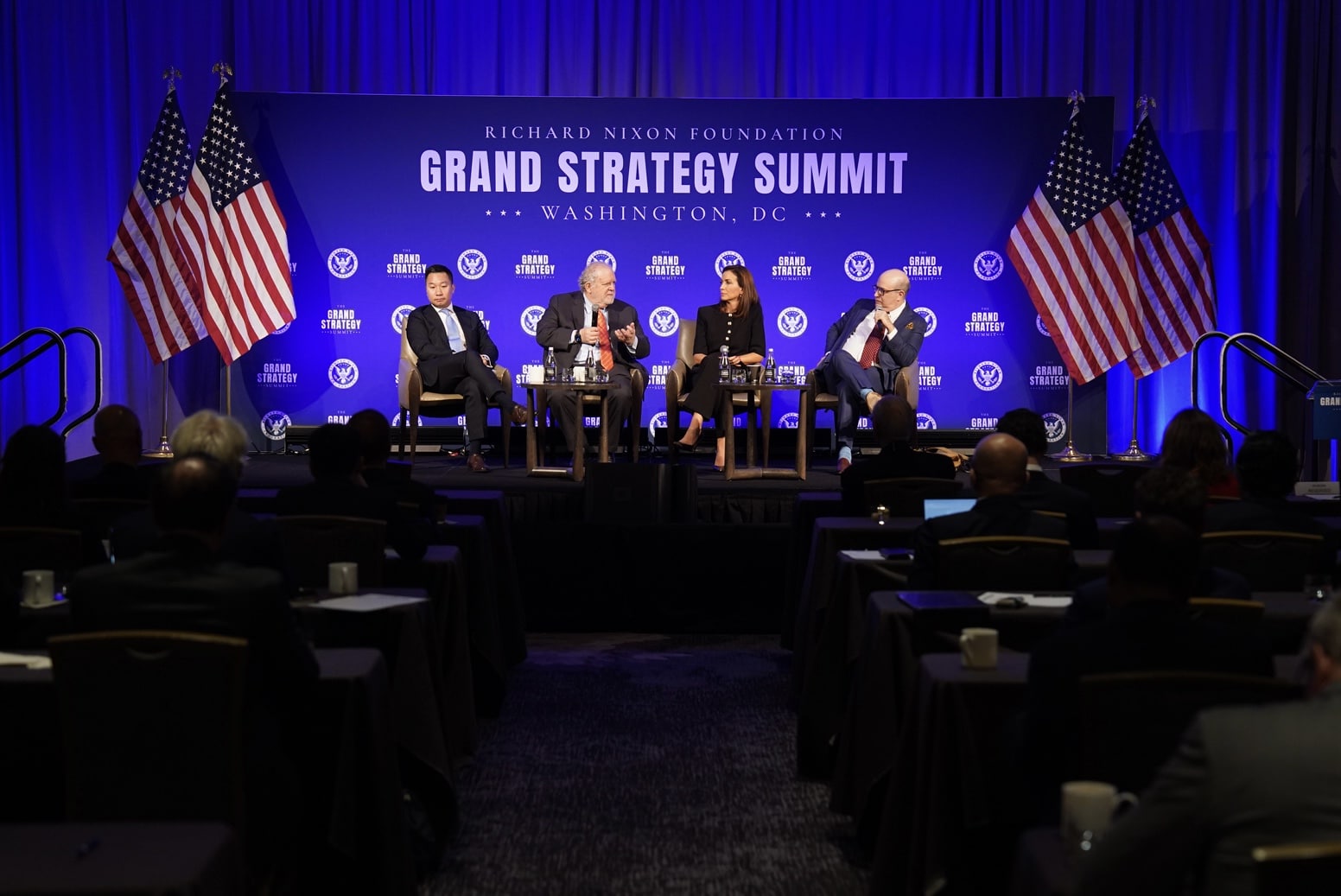
Watch here:
The Case for Energy Dominance
Jarrod Agen in Conversation With Katie Pavlich
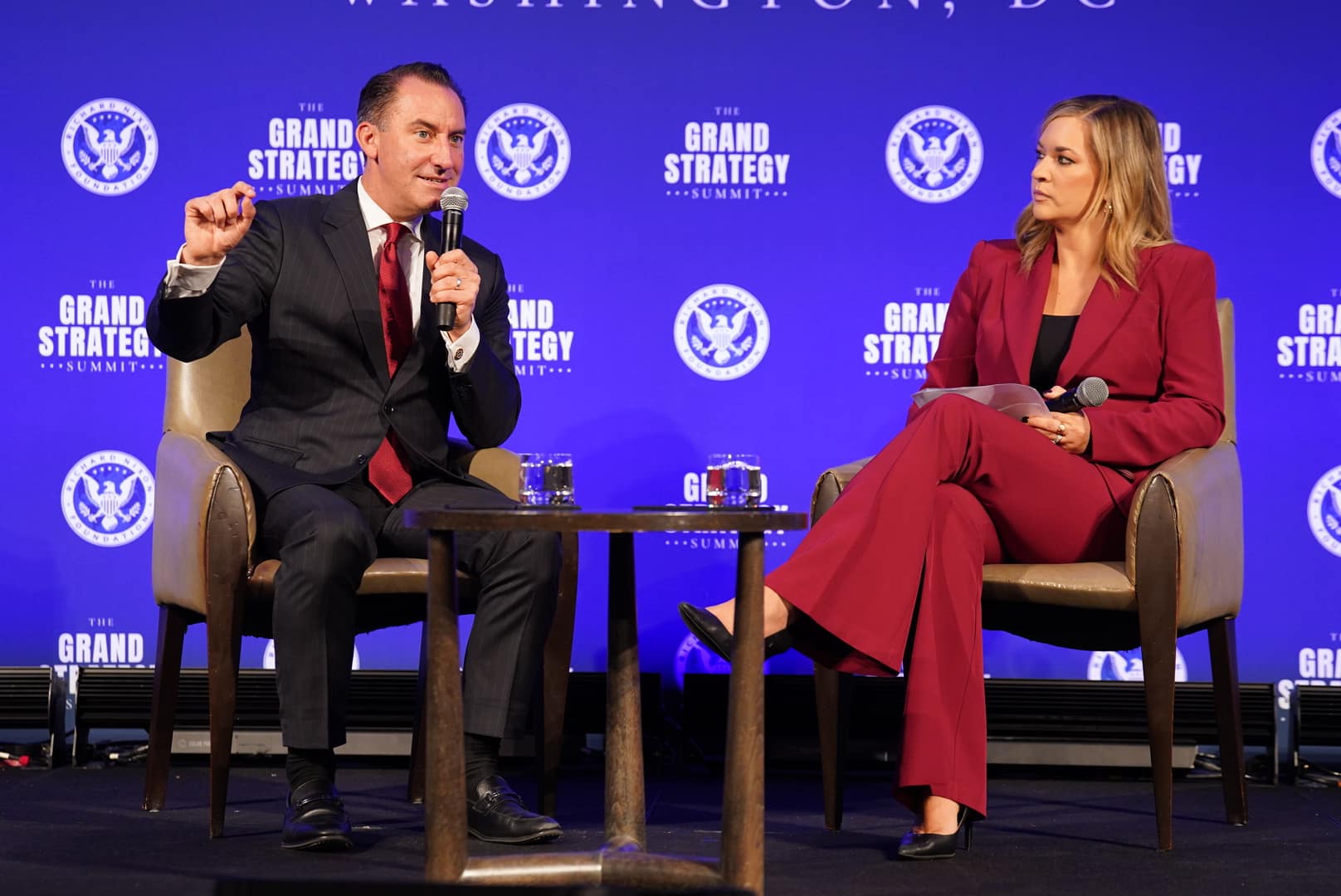
Introduced with President Nixon’s November 1973 call for Project Independence, a conversation between Jarrod Agen, Deputy Assistant to the President and Executive Director of the National Energy Dominance Council, and NewsNation host Katie Pavlich examined energy as an instrument of national power. Agen discussed historic strides in American energy dominance including the newly announced Alaska LNG pipeline, permitting reform, small modular reactors, refining capacity and critical minerals, arguing that “the Western Hemisphere is now the center of energy for the world.” He called nuclear power “the energy of the future” and the key to meeting demand from AI, and said there is no conversation about national security “that isn’t tied to energy security.”
Watch here:
Nixon Now: New Media Takes Nixon to a New Generation
Rep. Riley Moore in Conversation With Comfortably Smug
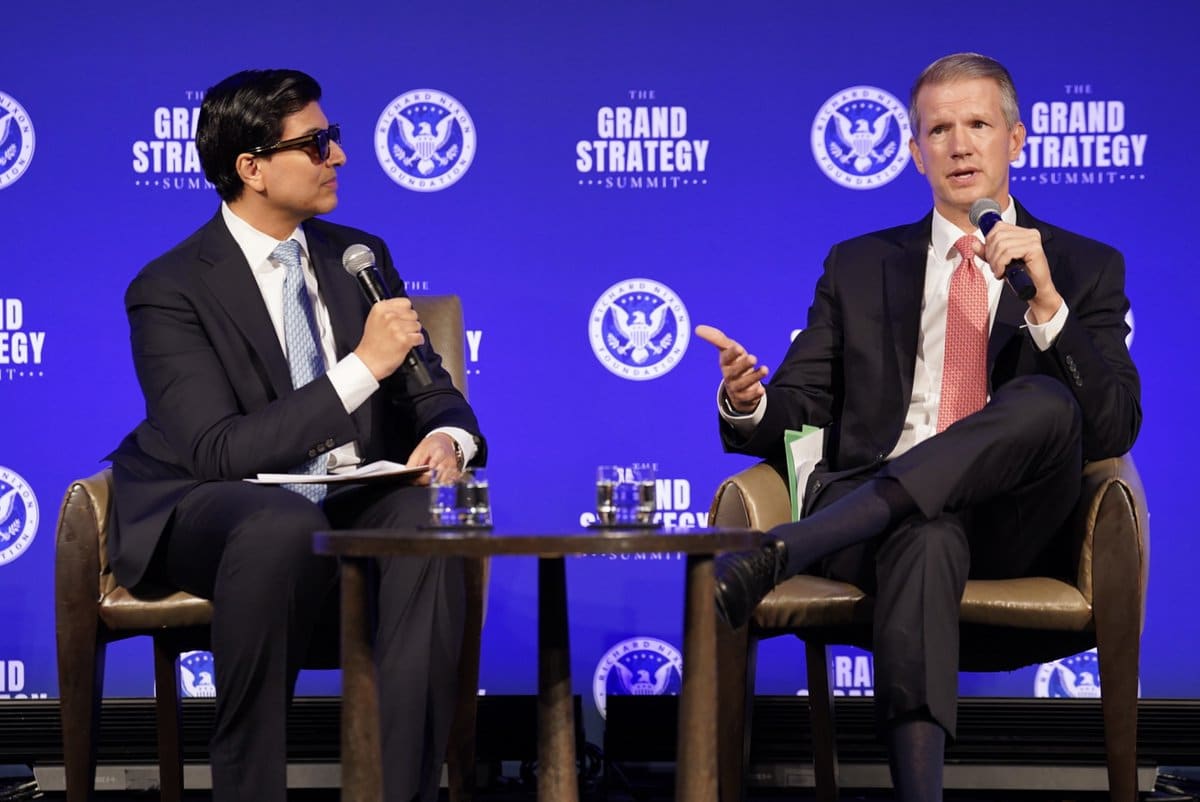
Over lunch, the summit turned to “Nixonmaxxing,” the online trend that has introduced President Nixon to a generation that knows him only through history books. Rep. Riley Moore, R-W.Va., whose grandfather, West Virginia Gov. Arch Moore, was a friend of Nixon’s, spoke with political commentator Comfortably Smug. “We’re hearing Nixon is back, but for me, he was never gone,” Moore said. He announced that he had written to the Acting Secretary of the Navy requesting that the next aircraft carrier be named for Nixon, the only one of six presidents who served in the Navy without a namesake vessel. Moore praised Nixon as “a fighter for the American worker” and called Nixon’s decision to attend Whittier College to help his family “a picture of a man that I think we can all aspire to be.”
Watch here:
Middle East Strategy Today: What the Nixon Years Still Teach
Rich Goldberg, Rep. Elise Stefanik, Lisa Daftari (moderator)
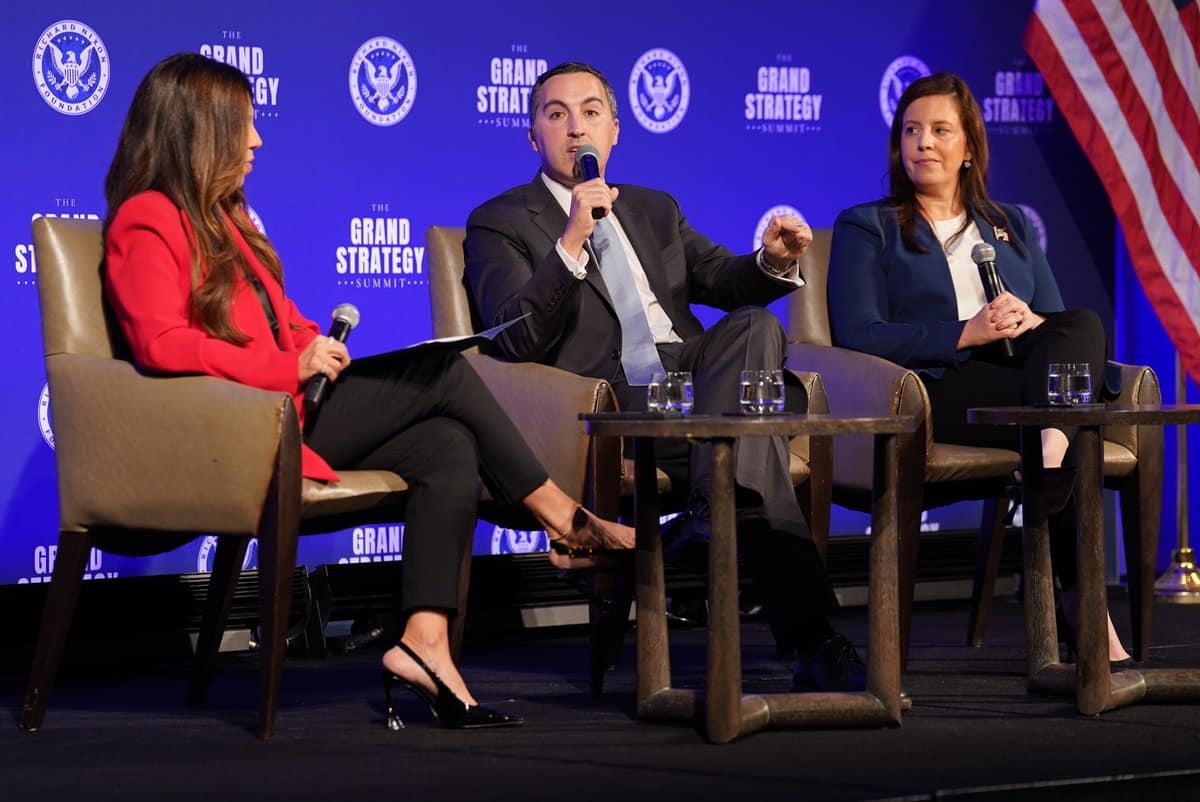
Moderator Lisa Daftari, Editor-in-Chief of The Foreign Desk, opened by recounting Operation Nickel Grass, the 1973 U.S. airlift to Israel after which Golda Meir called Nixon “my president.” Rich Goldberg, Senior Adviser at the Foundation for Defense of Democracies, said Nixon’s lesson is that “grand strategy matters,” describing the airlift as part of a broader effort to anchor the region on a U.S. ally against Soviet influence. Panelists discussed the war with Iran, the Abraham Accords, the Strait of Hormuz and the challenge of explaining foreign policy in a fragmented media age, a skill Goldberg called one of Nixon’s “great strengths.” Rep. Elise Stefanik, R-N.Y., a member of the House Armed Services and Intelligence Committees, linked rising antisemitism to grand strategy, calling it “the canary in the coal mine for anti-Americanism.” Daftari closed by saying Nixon “understood that peace in the Middle East was never the absence of power. It was power used wisely.”
Watch here:
The Next Strategic Frontier: AI and American Power
Taylor Budowich in Conversation With Ambassador Carla Sands
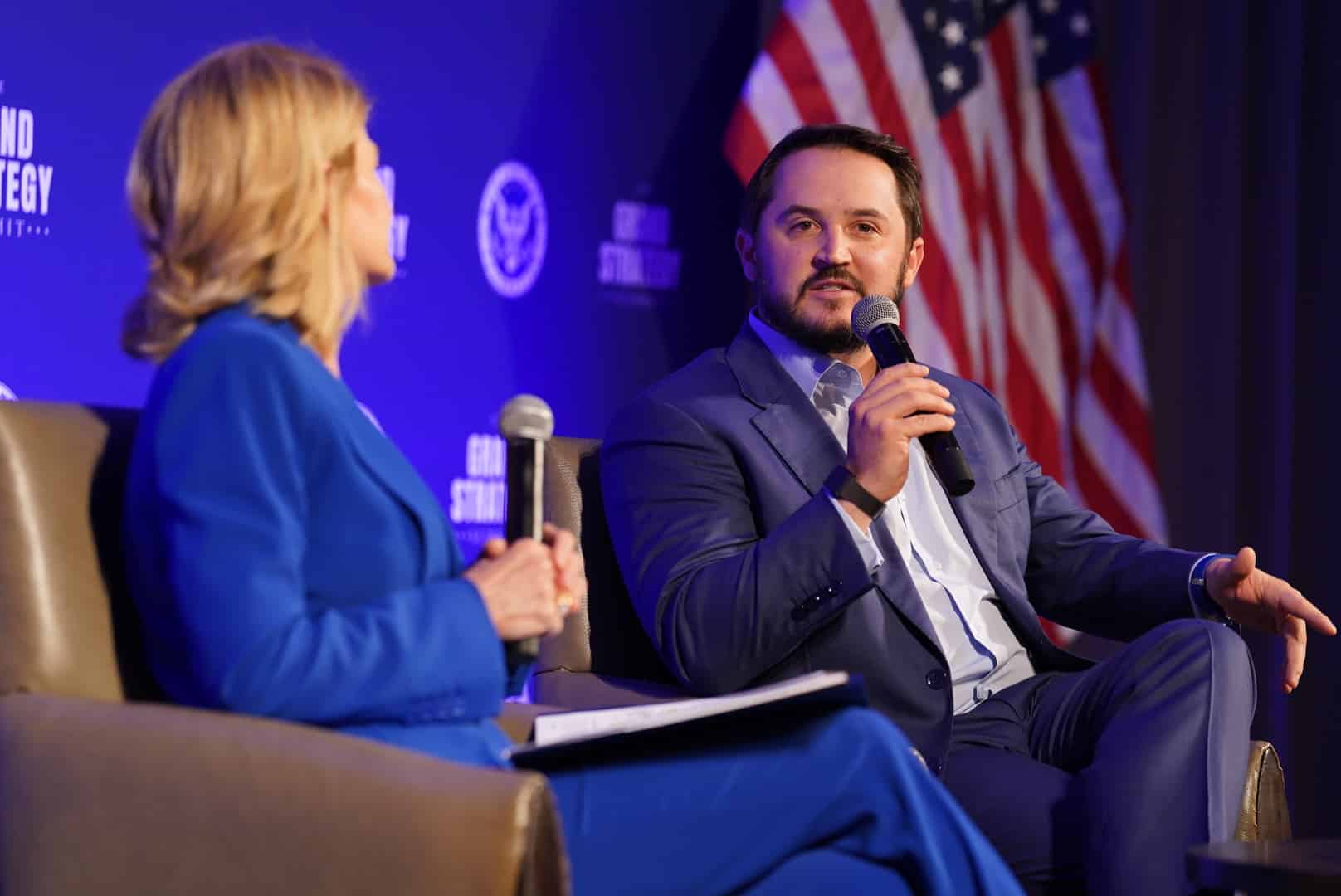
Taylor Budowich, Founder of Innovation Council and former White House Deputy Chief of Staff, and Carla Sands, former U.S. Ambassador to Denmark and a member of the Summit Steering Committee, examined what it will take to win the race for AI, or super intelligence. Sands cited Nixon’s 1972 special message to Congress on science and technology, which tied technological capacity to American prosperity and national power. Budowich said the president sees AI as “the new industrial revolution, maybe even bigger than the Industrial Revolution.” He defined winning as an American “stack” of energy, chips and models built in the United States and deployed around the world, and said data centers “shouldn’t drain communities. They should power them.” Budowich closed by linking the two presidents: “This is a moment for fighters.”
Watch here:
Strategy That Survives: A Vision for America’s Next 250 Years
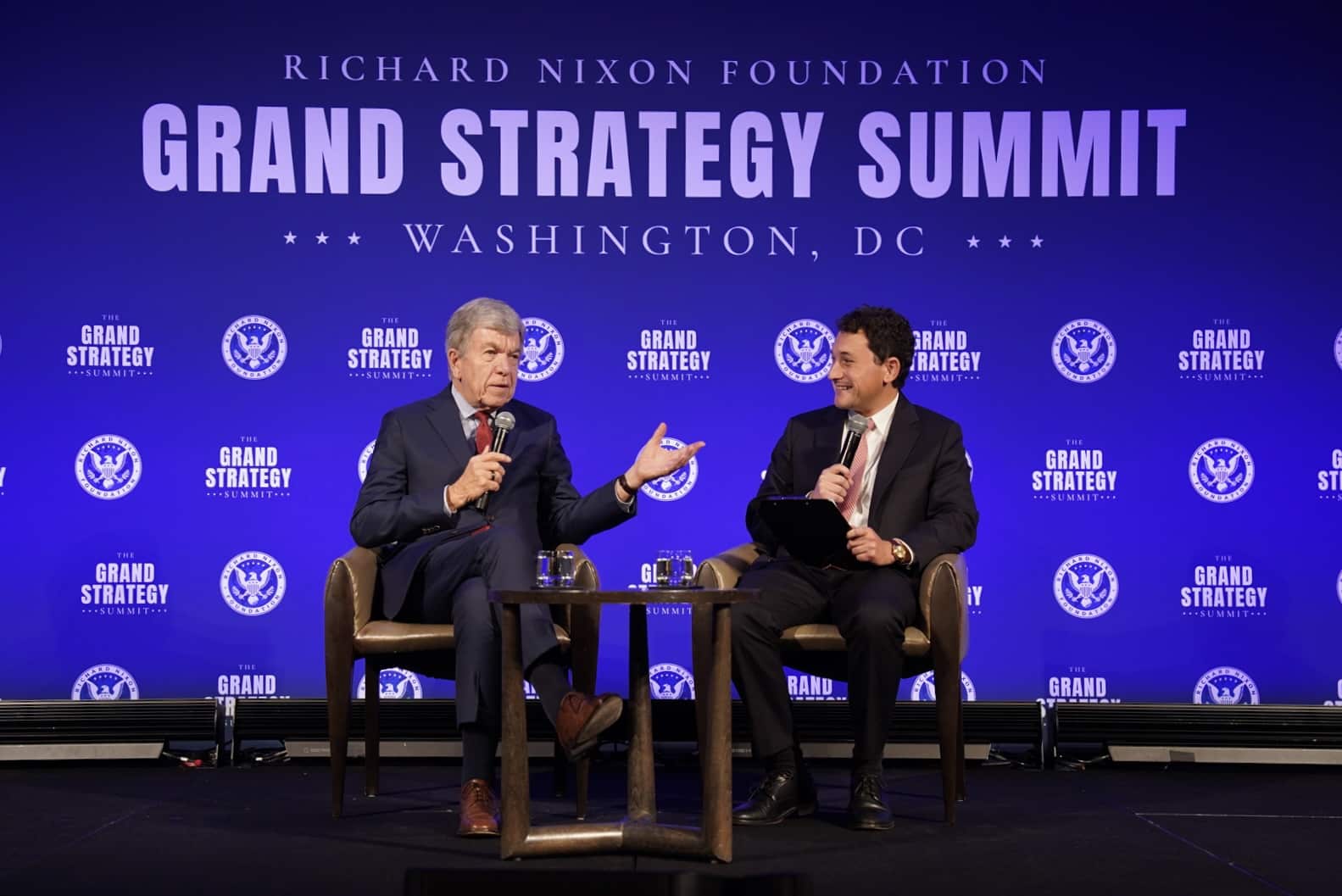
Sen. Roy Blunt in Conversation With Jim Byron
Former Sen. Roy Blunt, R-Mo., one of only two Americans elected to leadership positions in both chambers of Congress, closed the program in conversation with Byron. Blunt recalled that Alan Greenspan, asked which of the six presidents he served was the smartest, “would always say without hesitation, Nixon.” Drawing on Nixon’s final book, Beyond Peace, the conversation turned to the domestic foundations of strength abroad. Blunt said it is hard to imagine a president taking office in a more difficult time than Nixon in 1969, and that “every generation of Americans has to secure liberty and freedom for itself.” He urged leaders to explain grand strategy “as simply and consistently as possible,” pointing to Nixon’s opening to China as the model. The discussion also covered China, AI, the midterm elections and the 2030 census.
Watch here:
The summit continued that evening with a reception at the U.S. Institute of Peace, presented in partnership with the Nixon Foundation, on food security and fertilizer policy.