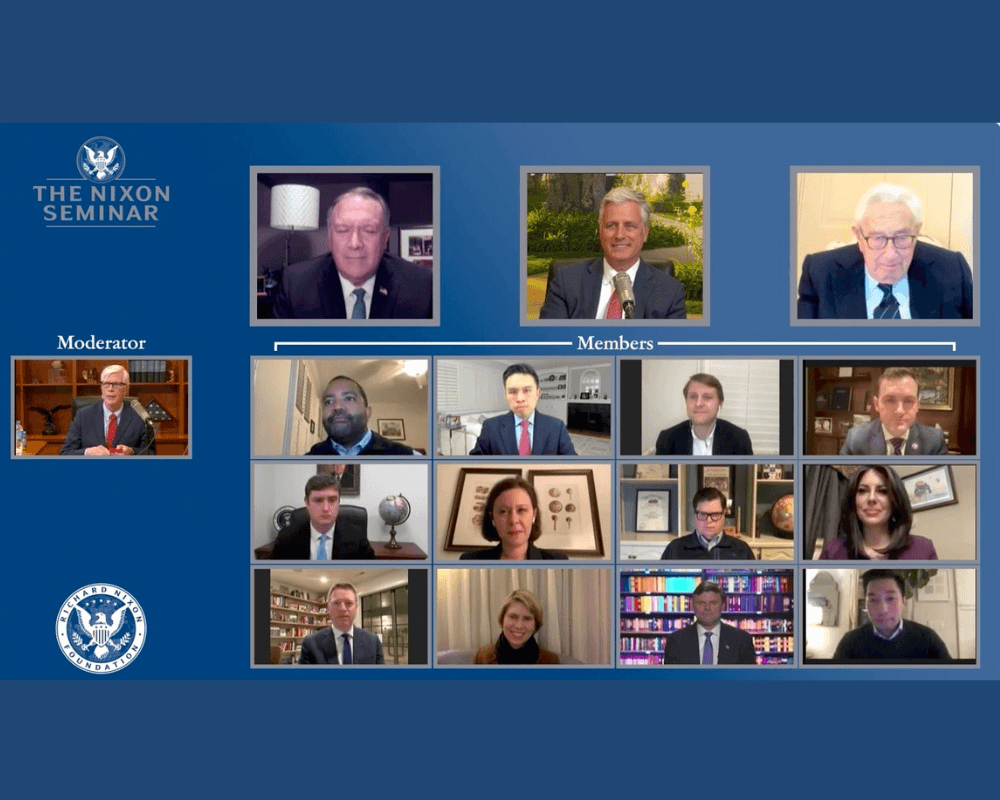
The Nixon Seminar on Conservative Realism and National Security ran monthly from March 2021 to June 2024, built on a single mission: to use history — and President Nixon’s own grand strategy — to inform the present and future direction of American foreign policy.
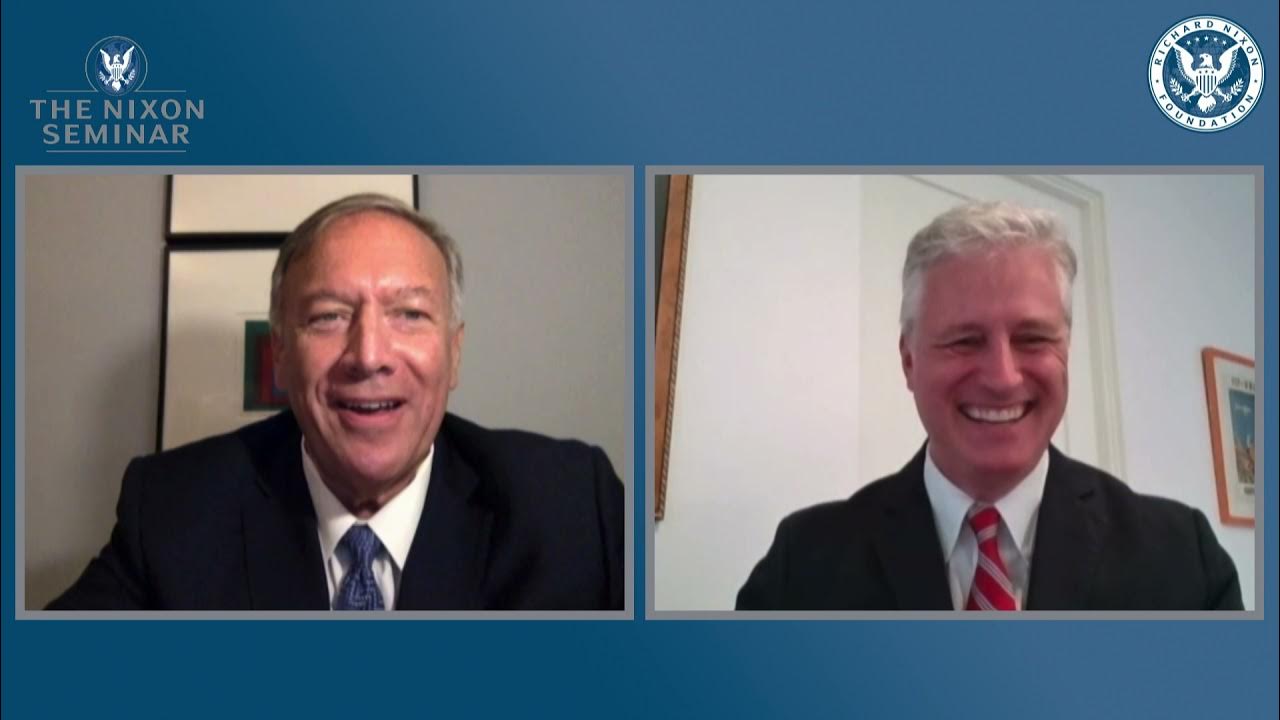
Co-chaired by Ambassador Robert O’Brien and Secretary Mike Pompeo, with Dr. Henry Kissinger serving as Honorary Chairman, the series brought together 15 senior strategists and emerging leaders each session to work through the era’s defining challenges: the withdrawal from Afghanistan, the Ukraine conflict, China-Russia rapprochement, the future of NATO, the Abraham Accords, U.S.-China tech competition, nuclear policy, and border security, among others.
Guests ranged from Peter Thiel and Ambassador Kay Bailey Hutchison to Congressman Ro Khanna and former Energy Secretaries Dan Brouillette and Rick Perry, helping the series reach tens of millions of viewers and establish the Nixon Foundation as a platform for serious national security debate — a role the Foundation now continues through its Grand Strategy Forums, anchored by the flagship annual Grand Strategy Summit.
Only the United States has the combination of military, economic, and political power a nation must have to take the lead in defending and extending freedom and in deterring and resisting aggression.”
— Richard Nixon, 1994
Video Library & Summaries
28 sessions, March 2021 – June 2024. Watch each conversation and read a short summary of the discussion.
Main Menu
2024
5 sessions
The Effects of Richard Nixon’s Foreign Policy
History, National Security
This seminar looks back at Richard Nixon’s foreign policy legacy and traces how the “conservative realism” he practiced in office still informs American strategy today. Panelists discuss what his approach to great-power diplomacy and regional conflict can teach current policymakers.
This session explores the two-way relationship between foreign policy and domestic politics — how international crises shape the American political landscape, and how domestic pressures in turn constrain U.S. foreign policy choices.
Seminar members assess whether the United Nations and other multilateral institutions still serve U.S. interests and global order, weighing reform against the case for working around these bodies. A full transcript is available on the site.
This seminar examines the state of the transatlantic alliance amid the war in Ukraine and shifting European politics, and what Washington should expect from — and ask of — its European partners going forward.
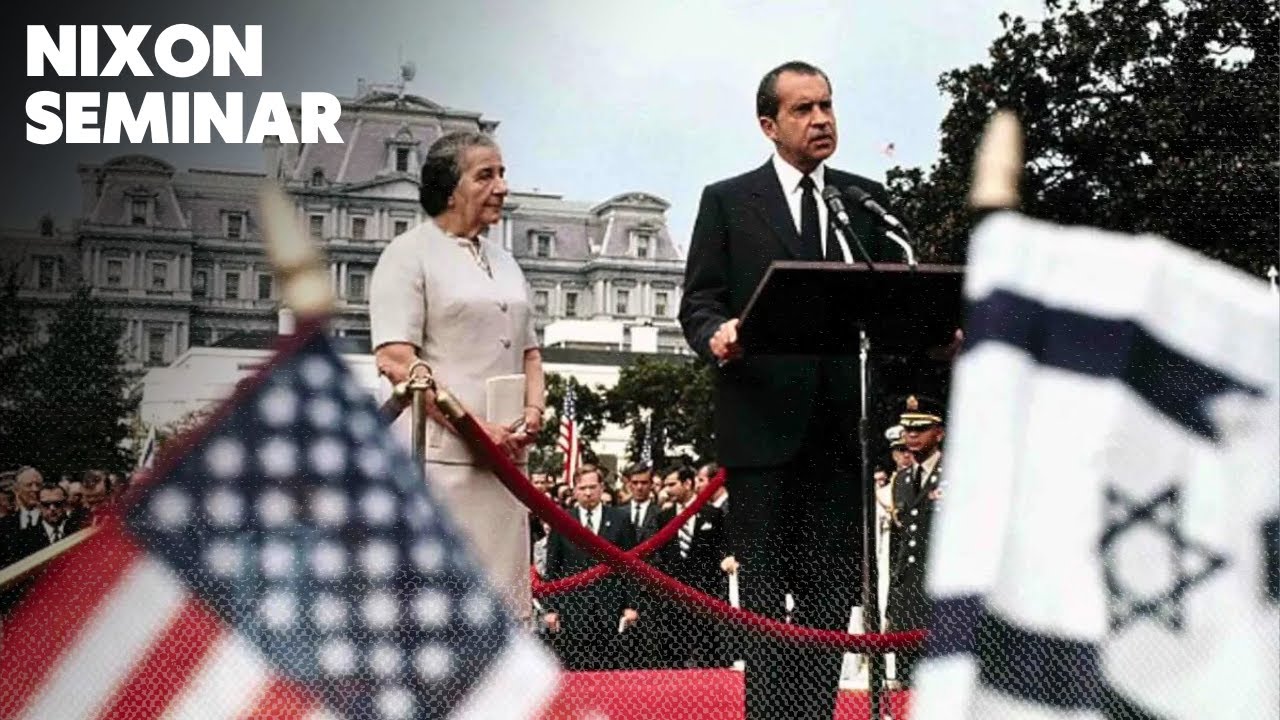
Framed by Nixon’s own strategy of restraining Soviet influence and promoting Arab-Israeli coexistence, this seminar asks what role America should play in the Middle East as regional threats intensify, and what responsibility neighboring states bear. A full transcript is available on the site.
Co-chairs Mike Pompeo and Robert O’Brien convene the Seminar to cover the latest developments in the Israel-Hamas war and their implications for U.S. strategy in the region.
Held as war broke out in the Middle East exactly 50 years after the 1973 Yom Kippur War, this seminar draws parallels between Nixon’s decisive “send everything that can fly” response then and the choices facing U.S. policymakers today.
This seminar examines the wave of coups across the Sahel, waning French influence, and Russia’s growing footprint in the region, and considers what role the United States should play amid these shifts. A full transcript is available on the site.
Panelists discuss border security, the fentanyl crisis, and cartel-driven violence and migration, exploring how these challenges fit into a comprehensive 21st-century strategy while preserving productive relations with Mexico and Central America.
Coming on the heels of a high-profile meeting between Xi Jinping and Vladimir Putin, this seminar asks whether the deepening China-Russia partnership will reshape global power dynamics and how the U.S. should respond. A transcript is available for download.
Six decades after Sputnik, this seminar argues the space race is back — and is about far more than scientific achievement. Discussion covers unexplained aerial phenomena in U.S. airspace and the growing role of the U.S. Space Force in national defense.
How Wars End: Lessons from Vietnam and Afghanistan
National Security
Marking the 50th anniversary of the Paris Peace Accords, this seminar compares the endings of the Vietnam War and the 2022 Afghanistan withdrawal, asking what “victory” means in modern conflict and what lessons should guide U.S. support for Ukraine.
Co-chairs Mike Pompeo and Robert O’Brien gather Seminar members to discuss the national security implications of social media platforms and the boundaries of free speech online.
This seminar examines how ongoing uprisings threaten the stability of the Islamic Republic of Iran, weighs the long-term U.S. strategic response, and considers the implications for the Abraham Accords and America’s regional partnerships.
Broadcast live from the Nixon Library and moderated by Mary Kissel, this seminar surveys a wide sweep of global flashpoints: India’s rise as a geopolitical power, U.S. opportunities in Africa and the Pacific Islands, the Commonwealth’s future after Queen Elizabeth II’s death, and a long-term strategy for Russia.
Two years after the Abraham Accords were signed, co-chairs Mike Pompeo and Robert O’Brien reflect on what has changed since and look ahead to the Accords’ future impact across the region.
Former U.S. Ambassador to NATO Kay Bailey Hutchison joins co-chairs Mike Pompeo and Robert O’Brien to discuss NATO’s role amid the Russia-Ukraine war and the alliance’s future as Finland and Sweden move to abandon decades of neutrality and join.
This seminar tackles the national energy crisis, examining its drivers and the policy choices facing the United States as energy security becomes an increasingly central national security concern.
Seminar members debate the merits and risks of a renewed Iran nuclear agreement, weighing the diplomatic tradeoffs against the broader U.S. strategic posture in the Middle East.
Convened in the early weeks of Russia’s invasion, this seminar addresses the unfolding Ukraine conflict and its implications for U.S. and allied strategy.
Ukraine, Russian Aggression, and the Role of NATO in the Eastern Bloc
Europe, National Security
Moderated by Mary Kissel, this seminar — held as tensions mounted on Ukraine’s border — examines Russian aggression and the role NATO should play in defending the Eastern Bloc.
Former Secretary of State Mike Pompeo and former National Security Advisor Robert O’Brien lead a wide-ranging discussion on the overall state of U.S. national security.
Former National Security Advisor Robert O’Brien leads a panel of former NSC officials and members of Congress through how the National Security Council actually functions — drawing on the “Scowcroft model” and touching on NATO funding increases, the Abraham Accords, and building consensus on China policy.
Big Tech & China: What Do We Need from Silicon Valley? Featuring Peter Thiel
National Security
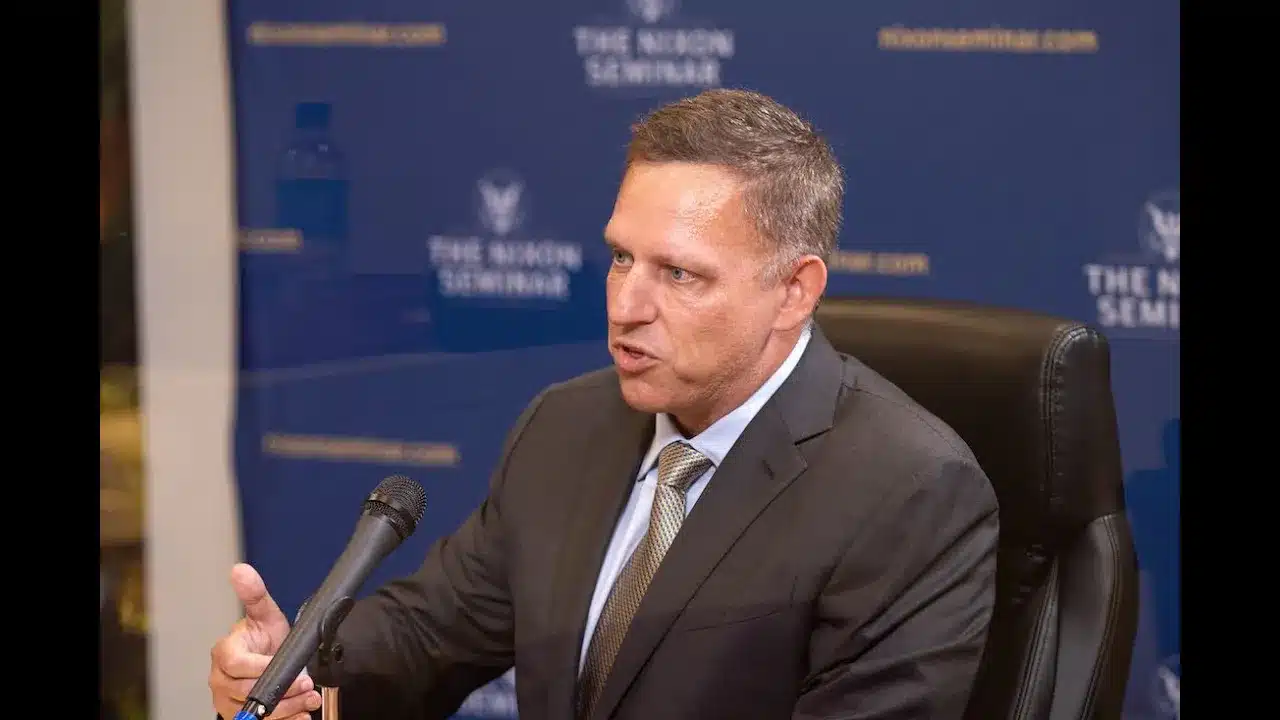
PayPal co-founder Peter Thiel joins co-chairs Mike Pompeo and Robert O’Brien to discuss U.S.-China technology competition — AI, semiconductors, and the risk of technology transfer to Chinese entities — and what Silicon Valley owes to American national defense.
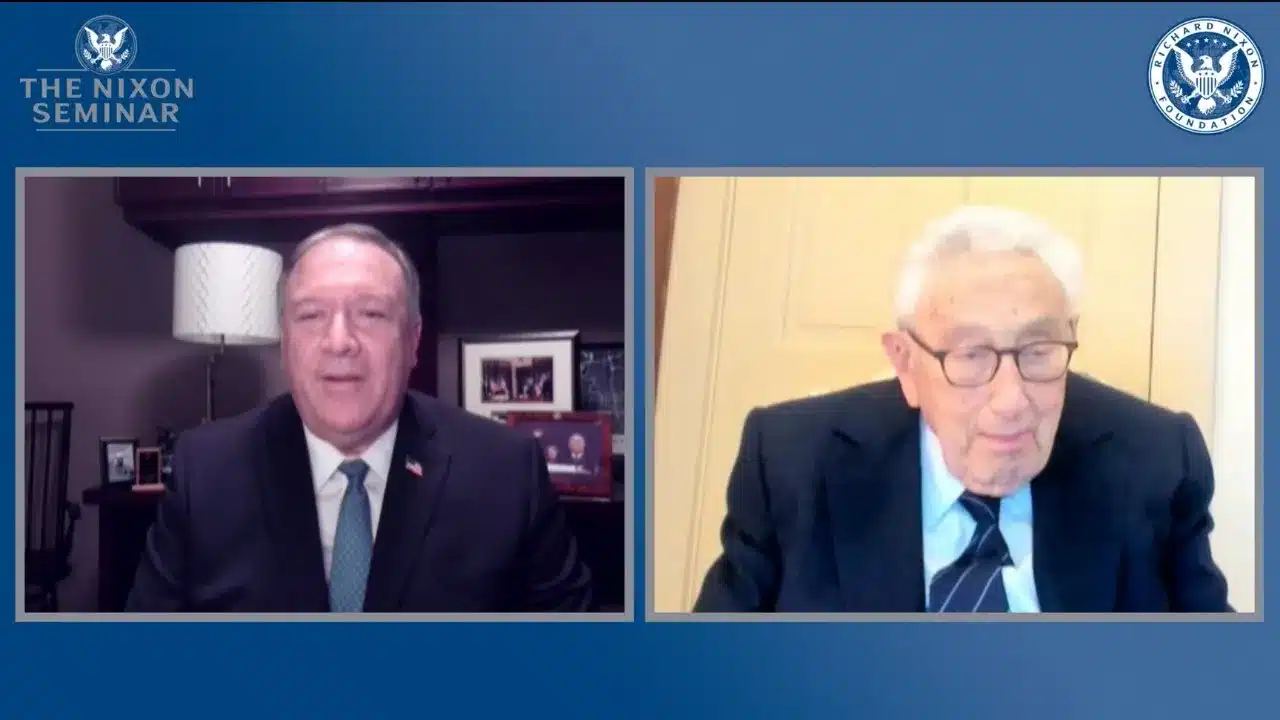
In a 75-minute conversation, Dr. Henry Kissinger fields unfiltered questions on ensuring America’s national security through presidential transitions, drawing on his experience across three transitions and reflecting on the Abraham Accords, U.S.-China-Russia triangulation, Middle East policy, and his years working with Nixon.