[et_pb_section fb_built=”1″ _builder_version=”4.16″ global_colors_info=”{}”][et_pb_row _builder_version=”4.16″ background_size=”initial” background_position=”top_left” background_repeat=”repeat” global_colors_info=”{}”][et_pb_column type=”4_4″ _builder_version=”4.16″ custom_padding=”|||” global_colors_info=”{}” custom_padding__hover=”|||”][et_pb_video src=”https://youtu.be/JYO50EeBbBI” _builder_version=”4.23.1″ _module_preset=”default” global_colors_info=”{}”][/et_pb_video][et_pb_text _builder_version=”4.23.1″ background_size=”initial” background_position=”top_left” background_repeat=”repeat” global_colors_info=”{}”]
Effective Use of the President’s Time
Nixon Legacy Forum
Richard Nixon Presidential Library and Museum
Yorba Linda, CA
February 15, 2010
Members of the Nixon Oval Office team discuss the management style of White House Chief-of-Staff H.R. Haldeman. Participants included White House staff members Stephen Bull, Dwight Chapin, Larry Higby, and Ron Walker.
[/et_pb_text][et_pb_text admin_label=”Background” _builder_version=”4.23.1″ _module_preset=”default” global_colors_info=”{}”]
Legacy Forum Transcript (to be added later)
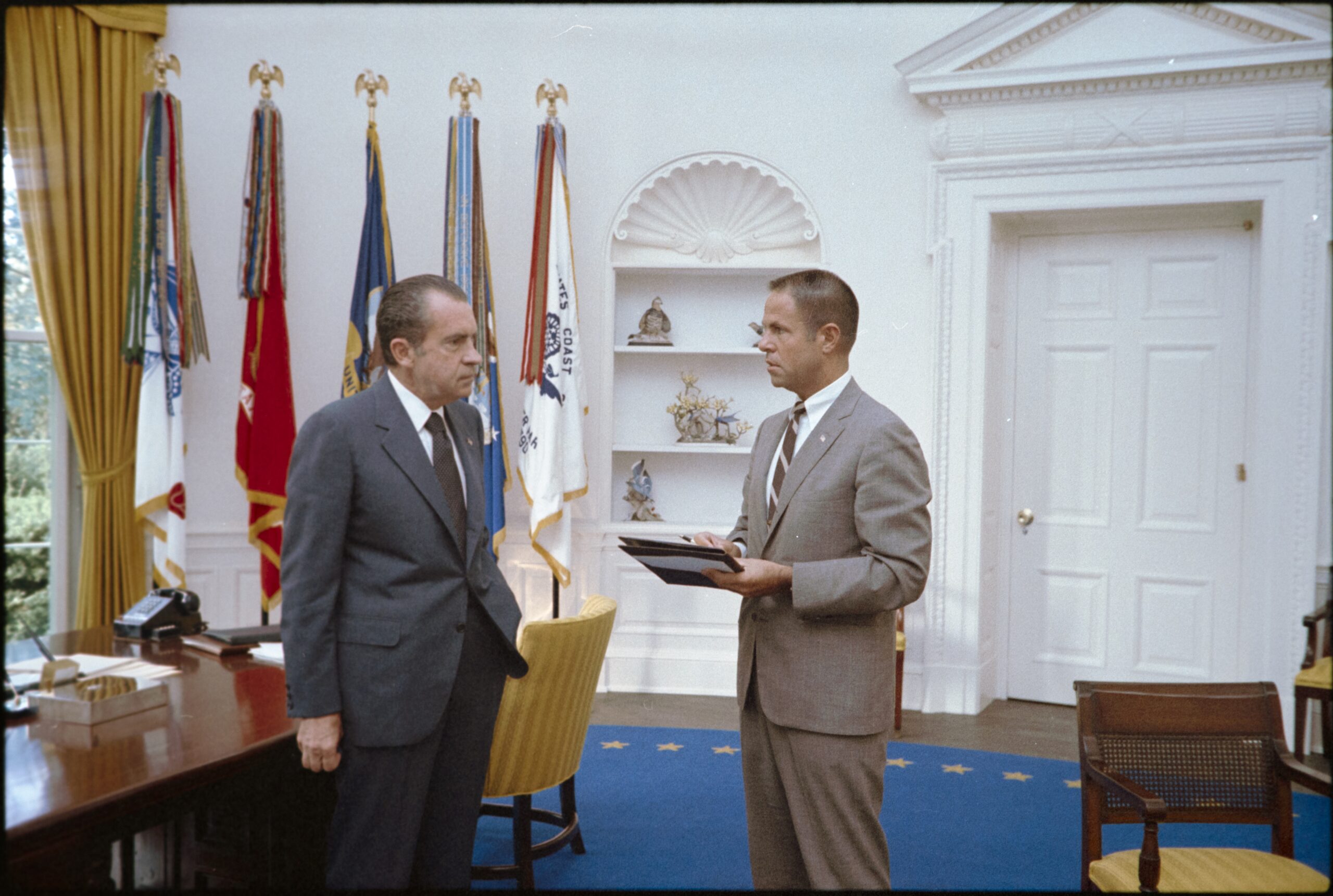
Photo September 17, 1971 Oval Office Nixon Haldeman Standing Color 37-whpo-7283-05-i-2020-rp
Background
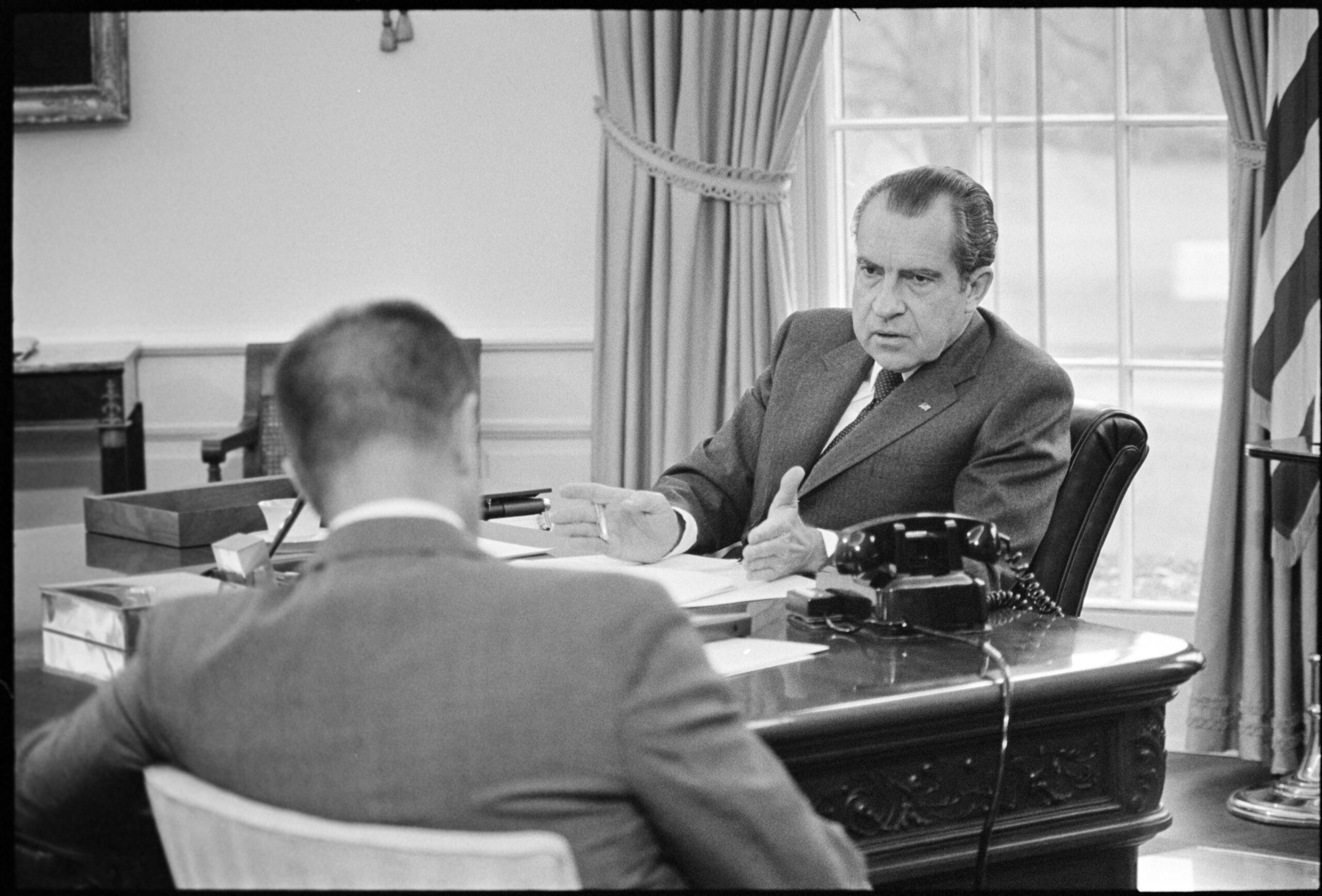
The effective use of the president’s time is a critical aspect of effective government. Upon entering office in 1969, President Nixon noted that the government of the United States had grown to become more complex and fragmented; structural and procedural changes would need to be made to ensure the president’s time was used more effectively and efficiently. The Executive Office of the President was, thus, organized into three primary components: the National Security Council, the Domestic Council, and the Office of Management and Budget.
President Nixon’s first Chief of Staff, H.R. “Bob” Haldeman, was an advance aide for on the Eisenhower-Nixon campaign of 1956, and oversaw advance operations as the Tour Manager on the Nixon presidential campaign in 1960 as well as the manager of Nixon’s 1962 gubernatorial campaign in California. Haldeman’s management skills, disciplined approach, and keen intellect led Nixon to appoint him Chief of Staff of the Nixon presidential campaign of 1968, and later White House Chief of Staff in 1969 with the official title of Assistant to the President.
Haldeman introduced a rigid organizational staffing system organized under the Office of the President to manage the president’s schedule and run Oval Office operations. The goal was to give the president all that he would need in order to make a decision, so the real-time flow of information was crucial. Once the president made a decision, this system would filter and route such information from the White House to the relevant Cabinet secretary for implementation. This model was closer to that of a major corporation than a government agency.
Importantly, the president’s time was managed tightly with the goal of ensuring that every moment was used as efficiently and effectively as possible.
The Nixon administration established the White House Office of Presidential Advance to coordinate details, plans and security arrangements in advance of every occasion that the president would leave the White House. This often included coordinating weeks and months in advance of a particular trip, conference, speech or event. President Nixon made dozens of trips domestically and fifteen trips abroad, most notably to the People’s Republic of China and the Soviet Union.
In addition, Haldeman’s system was influenced by his observations of the growing impact mass forms of media, especially television, had on the way the public received information. First applied in the Nixon presidential campaign of 1968, the mass media strategy was a core component of the effective use of the president’s time in the White House.
This “Haldeman System” would become the structural model that most successive White House Chiefs of Staff would follow.
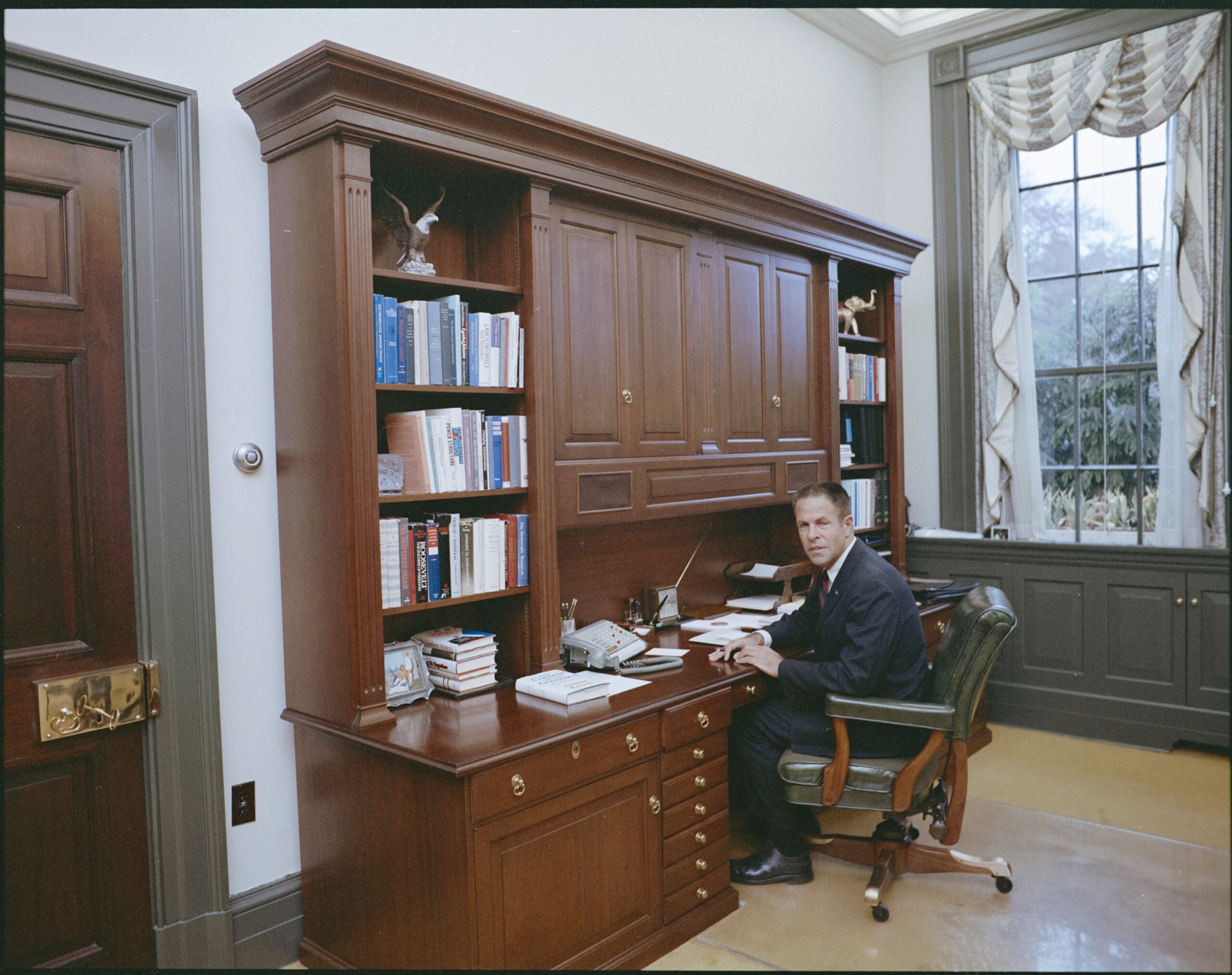
Photo Haldeman at his desk May 8, 1971 (37-whpo-6265-02)
[/et_pb_text][et_pb_text admin_label=”Essential Documents” _builder_version=”4.24.2″ _module_preset=”default” global_colors_info=”{}”]
Essential Documents
January 27, 1969 Procedure for Proposed Executive Orders
April 8, 1969 Staff Meeting Summary memorandum
July 16, 1969 Higby memo to Haldeman on Scenarios
July 19, 1969 Haldeman memo to Ehrlichman on plans for the week
August 7, 1969 Memo from President Nixon to Haldeman on top priorities
October 10, 1969 Haldeman memo on planning
November 10, 1969 Chapin memo to Haldeman on focal points
November 13, 1969 Haldeman memo on Follow-up Actions
March 2, 1970 Memo from President Nixon to Haldeman on discussions for implementation
May 13, 1972 Memo from President Nixon to Haldeman on schedule for the week
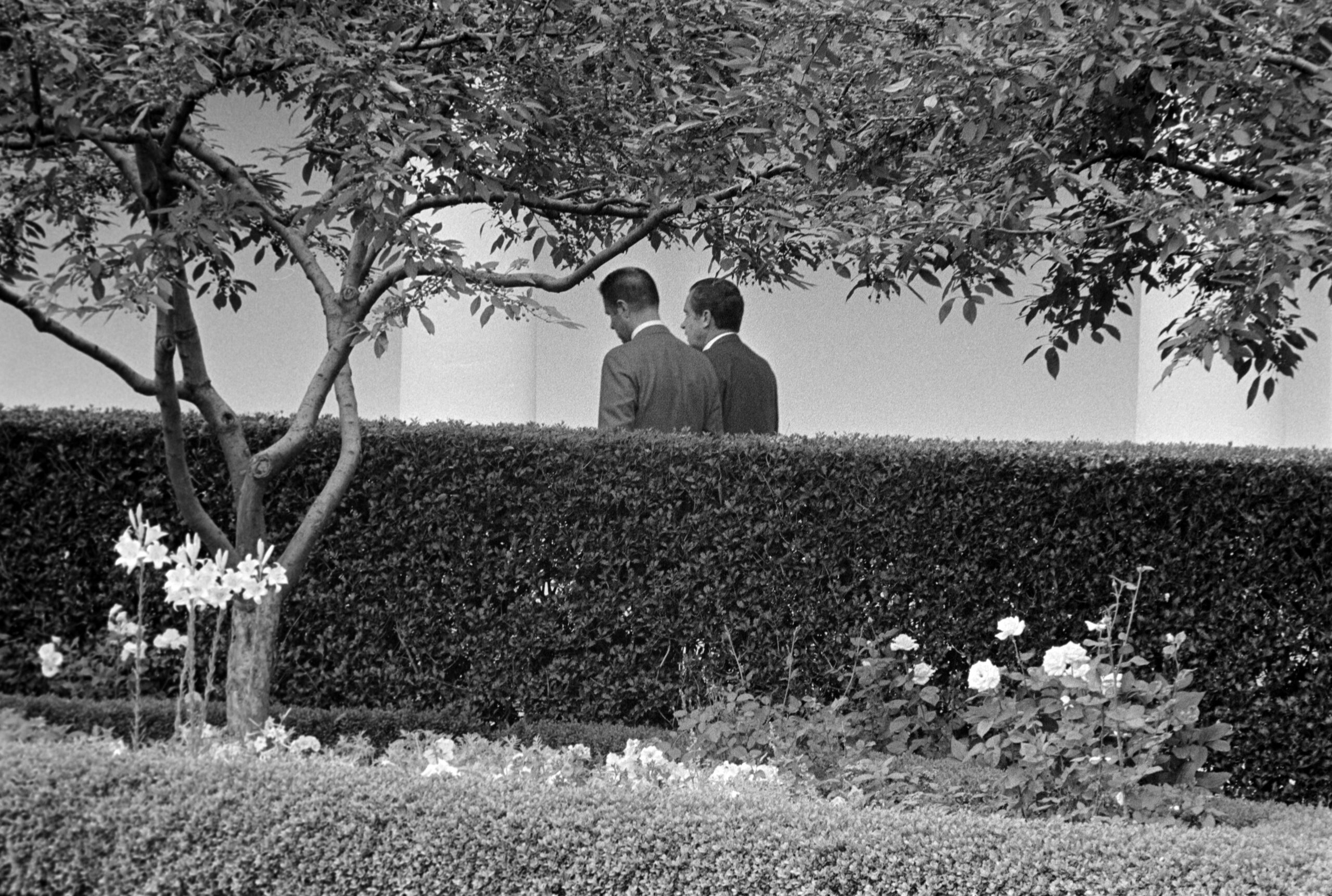
Photo Nixon Haldeman walking outside WH 37whpo-6642-17a-i-whpo-ec
[/et_pb_text][et_pb_text admin_label=”Documents for Further Study” _builder_version=”4.24.2″ _module_preset=”default” global_colors_info=”{}”]
Documents for Further Study
Mar 13, 1969 Haldeman memo to Chapin on scheduling
April 14, 1969 Memo from President Nixon to Haldeman on scheduling
April 25, 1969 Summary of the Staff meeting and President Nixon’s schedule
June 30, 1969 Summary of the Staff meeting and President Nixon’s schedule
July 8, 1969 Butterfield memo to Haldeman on changes to President Nixon’s schedule
July 18, 1969 Butterfield memo to the Cabinet on President Nixon’s schedule
July 29, 1969 Butterfield memo to the Cabinet on President Nixon’s schedule
August 4, 1969 Butterfield memo to Haldeman on Camp David setup
August 6, 1969 Cabinet Meeting Agenda
August 13, 1969 Agenda for the Dinner Honoring the Astronauts of Apollo 11
September 4, 1969 Chapin memo to Haldeman Summary of Presidential Activity
September 22, 1969 Memo from President Nixon to Haldeman on briefings
October 31, 1969 Haldeman memo meeting follow-up actions
November 3, 1969 Game Plan for November 3rd Speech
March 6, 1970 Magruder memo to Haldeman action plan
April 30, 1970 Chapin memo to Haldeman on President Nixon’s schedule
June 1, 1971 President Nixon memo to Haldeman on mail office operations
December 27, 1972 President Nixon memo to Haldeman on event planning
Butterfield memo to Haldeman on Presidential schedule
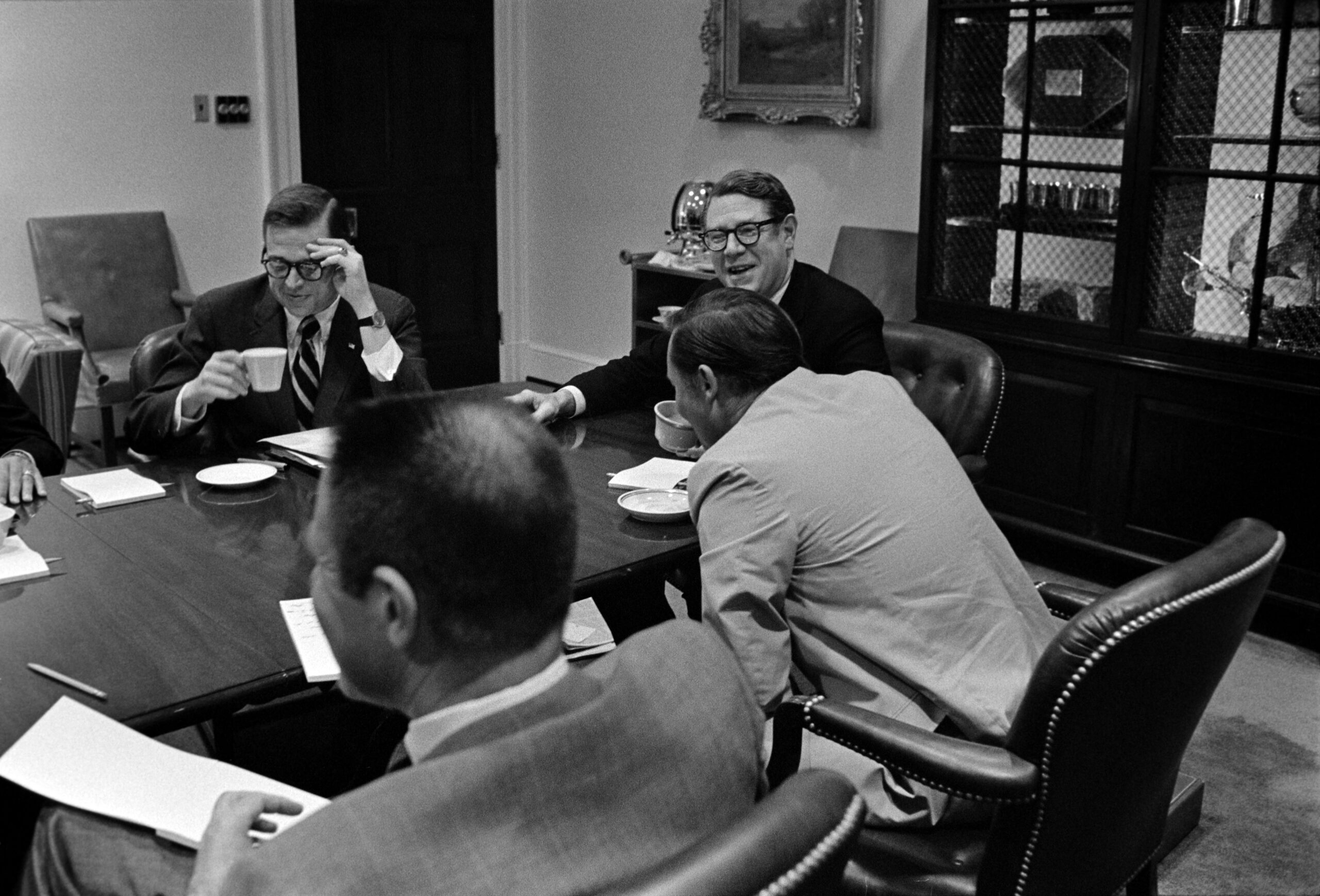
Photo April 21, 1971 Haldeman staff meeting 37whpo-6105-15-i-whpo-ec
[/et_pb_text][et_pb_text admin_label=”Tapes” _builder_version=”4.24.2″ _module_preset=”default” hover_enabled=”0″ global_colors_info=”{}” sticky_enabled=”0″]
Clips from the Nixon Tapes
22 February 1971 Public Relations 455-001 Oval Office
24 February 1971 Radio Statement 457-005 Oval Office
26 February 1971 460-22 Oval Office
16 March 1971 Press Conference 468-013 Oval Office
16 March 1971 Scheduling 468-013 Oval Office
17 March 1971 Scheduling 467-018 Oval Office
18 March 1971 Meetings 469-008 Oval Office
25 March 1971 Meetings 473-002 Oval Office
25 March 1971 Scheduling 473-002 Oval Office
11 May 1972 Analysis 723-012 Oval Office
7 November 1972 Election Results 33-48 White House Telephone
Photo December 6, 1971 Oval Office Nixon Haldeman 37-whpo-7916-05-i-2020-js
[/et_pb_text][/et_pb_column][/et_pb_row][/et_pb_section]